Flash USDT Creation Explained Step by Step
· based on the channel Rca FastPrint
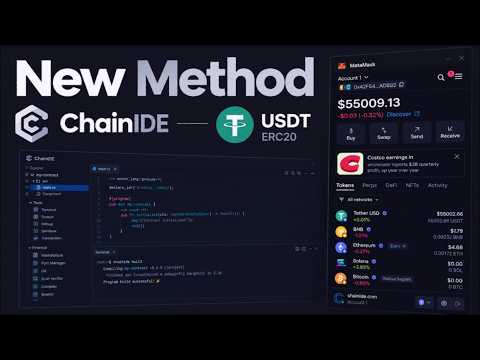
Video: How to Create Flash USDT With New Method 2026
Flash USDT is a method of generating a specific type of USDT token quickly by deploying smart contracts on the Ethereum blockchain. This approach relies on the ERC20 token standard and utilizes development tools like ChainIDE and MetaMask to create, test, and manage tokens securely.
## Understanding Flash USDT Concept
Flash USDT represents a newly developed approach to creating USDT tokens via smart contracts. Unlike traditional USDT transfers, this method enables users to generate tokens by interacting directly with a smart contract through an integrated development environment (IDE). The Flash USDT method focuses on rapid token creation and testing within Ethereum-compatible wallets.
## Setting Up ChainIDE and MetaMask for Flash USDT
To create Flash USDT, first set up ChainIDE, an online integrated development environment tailored for Ethereum smart contract development. ChainIDE allows users to write, compile, and deploy Solidity-based contracts efficiently. Next, connect MetaMask, a widely-used Ethereum wallet, to manage accounts and sign transactions.
Steps:
1. Open ChainIDE and create a new Solidity project.
2. Write or import the Flash USDT smart contract code.
3. Compile the contract to check for errors.
4. Connect MetaMask wallet to ChainIDE via Web3 provider.
5. Deploy the contract on the Ethereum test network.
## ERC20 Token Structure in Flash USDT Creation
The Flash USDT tokens conform to the ERC20 token standard, which defines a set of functions and events ensuring interoperability across Ethereum wallets and exchanges. The contract includes:
- totalSupply: the maximum number of tokens available
- balanceOf: tracks user balances
- transfer: allows token transfers between addresses
- approve and transferFrom: enable delegated transfers
This standardization ensures that Flash USDT tokens behave like regular USDT tokens in compatible environments.
## Interacting with Ethereum Network and Wallet Interface
After deploying the smart contract, use MetaMask to interact with the Flash USDT token. MetaMask manages wallet addresses, signs transactions, and connects to Ethereum networks. Users can:
- View token balance linked to the deployed contract
- Transfer Flash USDT tokens to other addresses
- Approve third-party contracts to spend tokens
Ensure the correct Ethereum network is selected (mainnet or testnet) to avoid unintended transactions.
## Smart Contract Development Workflow and Testing
Creating Flash USDT involves a careful development workflow:
1. Writing smart contract code with Solidity in ChainIDE
2. Compiling and debugging code to ensure functionality
3. Deploying the contract on a test network for live testing
4. Verifying contract code and address integrity
5. Conducting token transfers and balance checks via MetaMask
Testing is crucial to identify common errors such as incorrect gas limits, wrong network selection, or misconfigured contract parameters.
## Common Mistakes and Precautions
Users should avoid sending real funds to unverified contracts. Always:
- Verify contract source code independently
- Confirm contract addresses before interaction
- Use testnets for initial experiments
- Check transaction details carefully in MetaMask
These precautions help prevent loss of funds and exposure to scams.
## Useful Links
- Official Flash USDT creation script and guide: https://sites.google.com/view/defiflashusdt
## Conclusion
Flash USDT creation is a smart contract-based process leveraging ChainIDE and MetaMask to generate ERC20-compliant tokens quickly and efficiently. By following a structured development and testing workflow, users can safely deploy and interact with Flash USDT tokens on the Ethereum network. Always prioritize security by verifying contract code and using test environments. This guide is based on the detailed explanation by the Rca FastPrint channel, which provides valuable insights into Flash USDT methods. For practical resources and scripts, visit the official Flash USDT page linked above.
Key takeaways
- Flash USDT is created via smart contract development using ChainIDE and MetaMask.
- The process uses ERC20 token standards on the Ethereum network.
- Key tools include ChainIDE for coding and MetaMask for wallet interactions.
- The method involves deploying and testing smart contracts safely before use.
- Always verify contract code and addresses to avoid risks.
Questions & answers
What is Flash USDT and how is it different from regular USDT?
Flash USDT is an ERC20 token created via a smart contract development process allowing rapid token generation, unlike regular USDT which is issued by centralized entities.
Which tools are necessary to create Flash USDT tokens?
The main tools are ChainIDE, an online smart contract development environment, and MetaMask, a wallet for managing Ethereum accounts and transactions.
Is it safe to interact with any Flash USDT smart contract?
No, users should only interact with verified contracts and avoid sending real funds to unknown contracts to prevent potential losses or scams.
Can Flash USDT be tested before using real funds?
Yes, deploying and testing Flash USDT contracts on Ethereum test networks is recommended to ensure functionality and security before using real assets.
Source: How to Create Flash USDT With New Method 2026 · Markdown version